Where did you grow up, and what shaped who you are today?
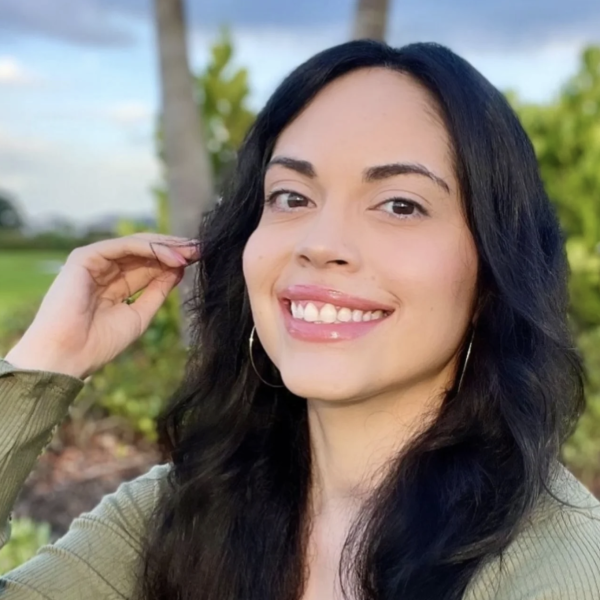
I like to say I’m American in the deepest sense because my mother is from South America, my father is from Central America, and I was born and raised in the United States of America. I also have mostly Indigenous (Americas) ancestry. I lived in CA, MI, MD, PA, and CT by the time I was 16, and I currently live in FL. My family and culture have shaped me into who I am today. I am a first-gen Latina with roots in Nicaragua and Ecuador. I grew up with two loving parents who sacrificed everything for my brother and me to have the best opportunities. Education was paramount in our household, and I always knew I wanted to go to college and graduate school. In retrospect, I realize that I hid behind a mask of academic achievement and prioritized academic performance over everything else. I felt I needed to validate the sacrifices my parents made and also to represent other Latinas in the classroom at my predominantly white schools.
What was your life like before you got sober?
I would say my life was inauthentic. I wasn’t truly connected to others or to myself. During my drinking years, I spent way too much time, energy, and money going out and drinking. I had few deep connections and chased one distraction after another. Yes, on paper, I excelled as a student at a top university. But behind closed doors, or rather, in front of others at parties, I struggled. I didn’t make the best choices, and I didn’t prioritize my safety or happiness. Simply put, I wasn’t happy. You can only run away from yourself for so long until your pain catches up to you. I was also living in fear of my brother’s addiction. I was constantly worried that he would die or get in trouble. I left for college with luggage full of clothes but also emotional baggage filled to the brim. I had no true understanding of trauma or nervous system regulation, so I didn’t understand what “fight or flight” was, let alone that it was my default setting.
When did you first realize you had a problem, and what finally led you to seek help?
I’m not sure when I had this moment of clarity, or maybe I need to reflect further on which moment was most impactful on my journey. But I know that going to a wilderness program and subsequent intensive outpatient program for alcohol was a clear mark that my relationship with alcohol was unhealthy. I agreed to go to this wilderness program at the recommendation of my parents. My brother was already in the same program after being kicked out of another rehab for his polysubstance abuse, so my parents figured it could only help me to participate and take a moment to myself. My parents knew I was drinking and that I was aloof, but they didn’t know the full extent of my behaviors. They did not give me an ultimatum, but I listened anyway. I know my parents love me immensely and that their concerns are sincere. Initially, I was against going to the middle of the Utah desert, but after thinking about it and speaking to a staff member, I did. This wilderness experience is still one I am unpacking 16 years later.
How did you get sober?
My sobriety journey was non-linear. I attended substance abuse support groups, an intensive outpatient program, a wilderness program, and therapy sessions. My drinking career lasted about three years. It started and stopped intensely. In fact, by the time I quit alcohol for good, I was twenty. So, once I could buy alcohol legally, I didn’t even want it. I wasn’t planning to live alcohol-free when I last drank alcohol. Long story short, I had a very scary night and finally woke up to what my reality with alcohol was. I understood there would be no more close calls. I was playing with fire, and it was inevitable that I would cross a point of no return. Once I took a break, I decided to keep extending the break further and further. Only at the seventh month mark did I consider drinking again, but thankfully stayed strong in my decision not to. After making it past that point, I knew I could stay locked into my sobriety for good. What was different this time, as opposed to previous attempts, was that I actually wanted to be sober.
What do you consider your sobriety date? Have you experienced any relapses, and what does maintaining your recovery look like day-to-day now?
My sobriety date is November 2, 2011. I have not experienced any relapses during my journey. However, I did unintentionally develop eating disorders once I stopped drinking. My disordered eating journey confirmed to me that, until I addressed the root cause underneath my self-destructive behavior, I would continue to turn to other numbing activities. I couldn’t achieve my way out of trauma and I couldn’t shortcut my way through healing. I needed to do deep healing work and that’s exactly what I did. Sustaining my recovery includes continuing to lean into my support system, including community groups and family. It also includes being open to learning, growing, and healing. I also received the appropriate mental health diagnoses and treatment that I had been needing all along.
What has surprised you most about recovery?
I’ve been most surprised by how many other people have walked a similar path. It can feel very isolating when you are actively struggling with substance use disorder. Shame can persuade you to isolate and cover up your experience. Once I started to share my story and actively seek support, I realized that I was far from alone. Millions of people in America right now are in need of treatment for addiction. There are people out there, despite having different backgrounds, who we can find common ground with. Furthermore, some of the people we have looked up to or look up to now may be in recovery. Recovery taught me that having substance use disorder is not a character flaw. Growing up, there was an even more pronounced stigma towards substance abuse than there is today. SUD is a legitimate medical condition that doesn’t discriminate. I wish more people understood that there is no “one look” for someone in recovery.
Who are the most important people in your recovery journey?
My family, which includes my parents, my brother, and my (now angels) fur babies, as well as friends I’ve made along the way. I can’t emphasize enough how much community has been a saving grace for me. We are not meant to do this alone, and I have yet to meet someone who has done it alone. One concept I want to emphasize is that of a “chosen family.” Your chosen family members are people with whom you have mutual trust, respect, and support, regardless of DNA. There are billions of people in the world with whom you can potentially form a bond. You don’t have to limit yourself to a 50-mile radius or to whoever is at your next family reunion. Truly having someone treat you with compassion and see the real you is liberating. We all deserve to experience that feeling in this lifetime.
What have you accomplished in sobriety that wouldn’t have been possible before, and how do you feel about your life today?
Being my authentic self has been my greatest accomplishment in sobriety. When you are not connected to your body and mind, you are not truly connected to yourself or your community. I didn’t get to know myself on a deep level until I did soul surgery, which included being in recovery. I was very closed off before recovery and was afraid to learn, let alone share, my story. Since being in recovery, I’ve spoken confidently on stages and in rooms across the country about my healing journey. I have also facilitated hundreds of support group meetings in the recovery space for various organizations. It’s been an honor to walk this path with countless other survivors around the world.
What advice would you give someone starting this journey to recovery?
Develop and strengthen your self-validation muscle. You are the expert on your experiences, thoughts, and feelings. You are the most permanent person in your life and the only person who has walked your entire path step by step. It took me a long time to get to a place where I can validate my own feelings and experiences. Growing up, I turned to elders and authority figures to validate whether I had a right to feel how I felt or whether an experience I had was accurate. Each time I did this, I handed someone else my power and enabled them to dictate my story. Now I know that I don’t need someone else to co-sign how I feel and think, and neither do you. You were there, it happened to you, and you are the expert. My self-validation journey has included therapy, community, and healing out loud. Everyone’s journey is unique. I encourage you to start. Whether it’s journaling your feelings or joining a support group, start aligning yourself with people and resources that will help you trust and amplify your voice. You got this.