David Murphy
1,519 days sober
Openly Sober recently connected with David Murphy for a written interview about their journey to long-term sobriety. You can find them at @DaveMurYYC.
Where did you grow up and what shaped who you are today?
I grew up in St. John's, Newfoundland, and like a lot of kids, I had dreams and energy. But life took a hard turn in 1994 when I was 18. I was in Ottawa and got into an altercation outside Bayshore Shopping Centre. I was stabbed 13 times. One wound missed my heart by half an inch, and another punctured my lung. Paramedics saved my life that night. If they had been six minutes later, I wouldn't be here.
That night, and the years that followed, shaped everything. I spent months bedridden, relearned how to walk, and was left with severe PTSD. For over two decades, I carried that trauma, numbed it with food and alcohol, and watched my life shrink. What shapes me today is the decision to turn all that pain into purpose, honouring the first responders who saved me, being the dad my daughter deserves, and helping other people who are dealing with addiction and trauma.
What was your life like before you got sober?
Before I got sober, I was slowly disappearing. After the stabbing, I gained nearly 200 pounds during recovery. I was in constant physical and emotional pain, so I used alcohol to escape, drinking six nights a week just to quiet the anxiety and PTSD.
By 2018, I was pushing 400 pounds. I felt worthless, tired, and like I was watching life from the sidelines instead of living it.
In 2014, I became a dad, but not the dad I wanted to be. I couldn't run or play the way my little girl needed me to. I convinced myself that being overweight and struggling was just "who I was." Looking back, I was carrying the weight of the attack, literally and figuratively, and it was destroying me.
When did you first realize you had a problem, and what finally led you to seek help?
I knew I had problems for years — the PTSD, the drinking, and the weight — but I kept telling myself I could handle it.
The real wake-up call came in 2018 at the park with my four-year-old daughter. She looked up at me with those big, hopeful eyes and asked if we could race home. I had to tell her, "Sorry, sweetie… you know Dad can't run."
The look of disappointment on her little face hit me harder than anything. In that moment, I realized I wasn't just letting myself down — I was letting her down too. That single look lit a fire in me I couldn't ignore. It was the moment I decided enough was enough.
How did you get sober?
I got sober as part of a complete life reset that started in 2018. Once that moment with my daughter hit me, I stopped making excuses. I cut down the drinking I was using to escape, started eating clean, took up boxing, and faced my PTSD head-on instead of numbing it.
It wasn't easy. Old habits and trauma don't disappear overnight, but every day I chose to show up for myself and for her.
I also turned the journey outward by giving back. For every pound I lost, I donated a dollar to first responders and veterans through a registered charity. That accountability and sense of purpose helped keep me going.
What is your sobriety date, and have you had any relapses or setbacks along the way? If so, what did you learn from it?
In August 2022, I will celebrate four years sober and in recovery on my 51st birthday this year. I don't usually highlight one specific calendar date, because my sobriety is tied to the bigger transformation that began in 2018. That's when I made the promise to myself and my daughter to get healthy and stop numbing the pain. I've stayed committed to that choice ever since.
Like most people in recovery, I've had tough days and setbacks along the way. What I've learned is that setbacks don't erase progress — they're part of the process. Every time I faced one, I came back stronger, because I had real reasons to keep going: my daughter, my partner, my health, and the people I now get to help by sharing my story.
What does maintaining your recovery look like day-to-day now?
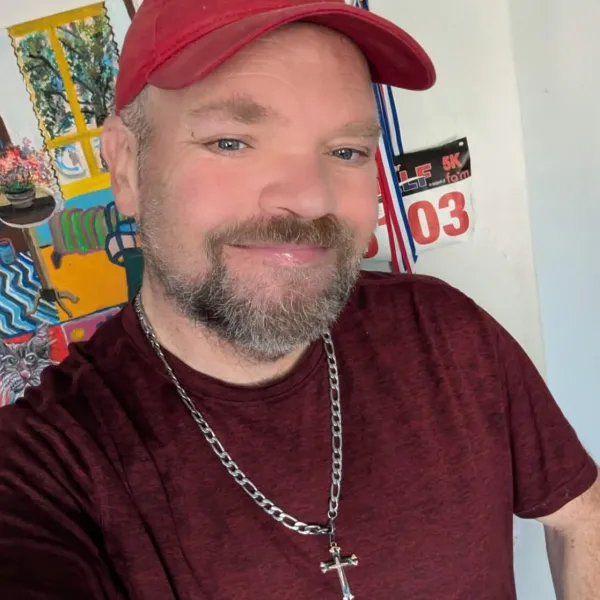
Today, my recovery is about showing up consistently for myself, my family, and the people I'm trying to help. I eat clean, stay active, and keep moving my body. I've lost over 170 pounds and gone from a 52-inch waist to a 32-inch waist. At 6'2", I'm now around 229 pounds and feel like a completely different man.
I also stay connected to purpose. My partner and I donate to PTSD and women's addiction charities for every workout we do. I'm writing children's books and creating content that helps families talk about addiction. Recovery for me isn't just about not drinking anymore — it's about building a life worth staying sober for.
What has surprised you most about recovery?
What surprised me most is how much lighter life feels — not just physically, but emotionally. For over 25 years, I carried the weight of that stabbing and the trauma that came with it. Once I started dealing with it instead of numbing it, I discovered strength and joy I didn't know were still in me.
The biggest surprise has been becoming the dad my daughter can actually run and play with. Watching her light up when we do a 5K together or just chase each other around is something I'll never take for granted. Recovery gave me my life back — and then some.
Who are the most important people in your recovery journey?
My daughter and my amazing girlfriend, Amanda, are at the center of it all. For my daughter, it was that look on her face in 2018 that changed everything. My partner, Amanda, has been an incredible support. She has her own powerful recovery story, and we lift each other up every day.
I also have to give credit to the first responders who saved my life in 1994, especially paramedic Joanne Overton McGregor, whom I finally reconnected with in 2022 after searching for years. We talk almost daily now.
And then there's the community of people I've met through recovery work and my podcast. They remind me that I'm not alone. The guests who have shared their stories on my "30 Minutes of Fame" podcast have been the most rewarding part of it. Having real conversations with real people has taught me a lot about myself and helped me stay on track.
What have you accomplished in sobriety that wouldn't have been possible before, and how do you feel about your life today?
In sobriety, I've lost over 170 pounds, gone from barely being able to move to running a 5K with my daughter, and become a published author and podcaster.
I'm co-creating a children's book series with my amazing partner, Amanda, called When the Clouds Come Home, to help kids whose parents are battling addiction. All royalties go directly to recovery centers.
Most importantly, I finally feel like the man I was always meant to be. I have energy, purpose, and real relationships. I went from watching life happen to actually living it.
Today, I feel grateful, strong, and hopeful in a way I never thought possible.
What advice would you give someone starting this journey to recovery?
If you're struggling right now, remember this: sometimes the smallest moment with the people you love most can spark the biggest change. For me, it was one look from my four-year-old daughter. It doesn't have to be dramatic; it just has to be honest.
It's never too late. The people in your life are worth fighting for, and so are you. Start small, stay consistent, and don't be afraid to reach out for help. You don't have to carry the weight alone anymore.
One decision, one day at a time, can completely change your story — just like it changed mine.