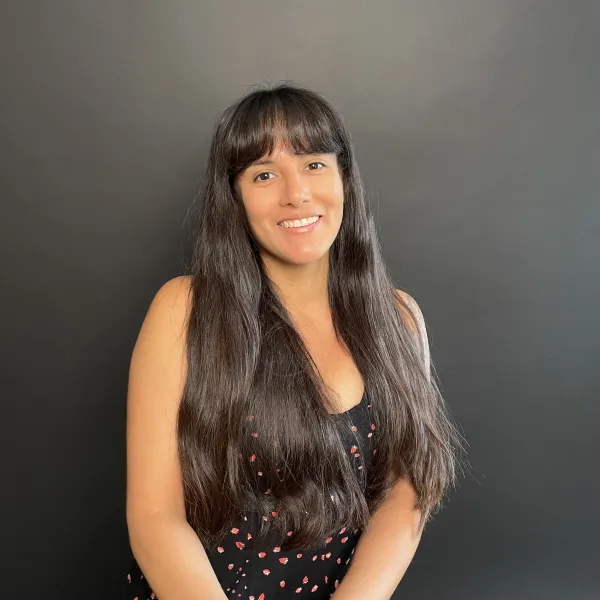
Laura Tarantino
3,262 days sober
Openly Sober recently connected with Laura Tarantino for a written interview about their journey to long-term sobriety.
Where did you grow up and what shaped who you are today?
In 1988, I emerged in Lima, Peru. Not as a noble creature, but as a feeble critter, born in a droopy state of perpetual self-destruction. Just kidding; not kidding.
Shortly after being born in Peru, I was adopted and raised in Virginia by a loving Jewish mom. As a single mother, though, she could not be everywhere at once. I experienced trauma at a young age that made me feel sick inside. I learned the feeling of wanting to die before I was a teenager. This eventually led me to a decade of non-stop drug use.
What shapes me today is a combination of chaotic plots twisting around me: being adopted, struggling with addiction, spending years in prison, finding recovery, becoming a mother, earning a graduate degree, and helping others through their own challenges. Those experiences taught me that life is complicated and that we should be kind to each other. They also taught me that connection, and a sense of humor, can carry us through life's bumps.
What was your life like before you got sober?
Before I got sober from drugs, I was in an alternate reality. I didn't even know I was Laura. I was awake on drugs. I was asleep on drugs. Sleeping hours were a lie. My brain was not stable.
Before I got sober from alcohol, my life often looked more functional from the outside than it felt on the inside. There were periods when I was working, maintaining relationships, and checking many of the boxes that suggested everything was under control. Internally, I spent a tremendous amount of energy managing anxiety, loneliness, shame, and a constant feeling that I was somehow out of place. Every morning I would wake up and promise myself I would do better. Every evening I was drunk.
When did you first realize you had a problem, and what finally led you to seek help?
In 2017, at my son's birthday party, I remember getting down to the floor to take a photo of the kids from a ground angle. After I took the photo, I started to push myself up, and I could tell my elbows were shaking and my knees were bending inwards.
When we got home, I sat on the couch, and my husband came up to me and said, "Let me look at your eyes."
I looked up at him with my mouth closed, ready to tell him to back the fuck off. He stared at my eyes and said, "They are yellow."
Snapped a photo
My face was flushed. "What?" I asked in a guilty tone.
"I just got a text from my brother saying your eyes were yellow."
This tracked. Earlier at the party, my sister-in-law had commented about how fun the party was and then began to space out, looking into my eyes for a long second.
A couple of hours later I was lying in a hospital bed. My husband took our son to the cafeteria, and I sat there feeling like I was lying on rocks. Jagged, bone-hard, indifferent.
The hospital room was so damn white.
White bed.
White wall paint.
White flooring.
White toilet.
White door.
Everything was white.
But me. I was jaundiced yellow. I never felt sicker in my skin. My yellow skin. My yellow eyes.
A Peruvian Jew shouldn't be this yellow. And for fuck's sake, I shouldn't have alcohol-induced jaundice at my kid's birthday party.
That's the day I sought help, and got sober.
How did you get sober?
Even though I once bought into all the reasons not to go to AA (they're too religious, blah blah blah), I forced myself to go to AA every single day anyway. I eventually found a sponsor who made me work the steps with her every Sunday. I started to build a support group of friends who knew what I was experiencing. I joined online communities on social media that shared stories and encouragement. When I got my strength back, I started working out every day. Running and exercise became more than a hobby. They became a linchpin to my recovery. I feel alive and well after every workout.
What is your sobriety date, and have you had any relapses or setbacks along the way? If so, what did you learn from it?
November 12th, 2017. Before that, I relapsed four times. I learned that if I didn't have a routine that I was strict about, I would slip.
What does maintaining your recovery look like day-to-day now?
Recovery is part of my daily life. Every morning I wake up and drag a sled full of boulders through the snow, punch frozen sides of beef, sprint up mountains, and challenge Russian heavyweights to boxing matches. Oh wait, that's Rocky Balboa. My actual routine is much less exciting. Most mornings I go for a run before work. I spend time with my family, stay connected to recovery friends, and try to make it to an AA meeting when I can. I pay attention to my stress levels, my thinking, and the little warning signs that tell me I need to slow down and take care of myself.
What has surprised you most about recovery?
Recovery made me feel like I have a chance at winning this game of life. It made me stronger. The hard things still happen. People still get sick. Bad days still show up. The difference is that I get to face those things as my real self.
Who are the most important people in your recovery journey?
Helpers come in many forms. Mine were prison mates, officers, carpool buddies, teachers, family. Some showed up in uniforms, others in hoodies or scrubs. Some stayed for a season. Some stayed for good.
I am grateful to my family, who drove me to AA meetings when I could barely walk after detox. I am grateful to my husband, who searched my backpack, purse, and drawers for alcohol when I needed accountability more than privacy; yes, sometimes I wanted to punch him. I am grateful to my online recovery friends who encouraged me when they had no reason to, to the friends who send me ridiculous videos to make me laugh, to Georgetown for giving me a chance, and to my work colleagues who always have my back despite my impressive ability to be a complete misfit.
Also, I am grateful for myself. Recovery gave me the opportunity to spend enough time with myself to realize I wasn't the villain I thought I was. I learned to like myself. At least a little.
What have you accomplished in sobriety that wouldn't have been possible before, and how do you feel about your life today?
I'm presenting at the NAADAC Annual Conference this fall. I'm so damn nervous, haha. Years ago, I was cycling through jails and prison. Today, I have a graduate degree from Georgetown, interned at the White House, work as a Registered Peer Recovery Specialist, and get to help people who are fighting battles that once nearly defeated me. None of that seemed possible when I was drinking.
What advice would you give someone starting this journey to recovery?
You might be lying on the rocks right now. Or curled up under them. Or trying to pretend they don't hurt. But hear me: you can still breathe on the rocks. You can still have faith on the rocks. You can even dream from the rocks. And yes, pain keeps going even when you're sober. Sometimes, you find yourself back on those rocks more than once. That's okay. You're still alive. That's something. Remember to be kind to others AND yourself, even when your brain says you're garbage. Keep the helpers close to you. Tell them thank you. Tell them again tomorrow. And most importantly, write down your goals and look at them often. I don't know why, and I don't want to sound like Tony Robbins, but the goals you write down have a funny way of becoming real.