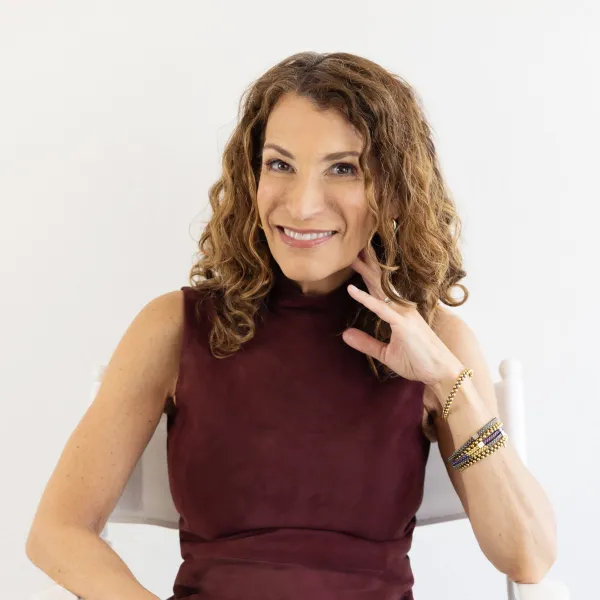
Lisa Smith
8,224 days sober

Openly Sober recently connected with Lisa Smith, author of the book Girl Walks Out of a Bar: A Memoir, for a written interview about their journey to long-term sobriety. You can find them at lisasmithadvisory.com.
Where did you grow up and what shaped who you are today?
I grew up in New Jersey, in a suburb of New York City. My family was close and loving; my dad was a judge and my mother was a teacher. They were social drinkers. There was a big focus on academics in our house, which was fine with me. I loved reading and learning. But like many people in recovery, I was never quite comfortable in my own skin. I was an anxious kid and a catastrophizer. When I was very young, I found that sugar eased those feelings. Of course, I didn't know anything about the dopamine hit flooding my brain — I just knew that sugar made things feel better. It was the first substance I abused.
By the time I was 12 or 13, I was drinking on the weekends with other kids who liked to drink. Sugar was no match for the relief from anxiety I got from alcohol. I had my first blackouts in high school. As long as I came home with all A's, though, my parents gave me a long leash. Through college and law school, I actually believed that drinking hard on the weekends was good for me. I thought it was a great way to blow off steam before starting a new week.
What was your life like before you got sober?
I lived a double life for about 10 years. On the outside, I was a put-together, successful lawyer in a big New York City firm. I had a great job, nice apartment, food in the refrigerator, and money in the bank. I walked around smiling and engaged with everyone around me.
But on the inside, I was slowly dying. I had become a nightly drinker during my first year as an associate attorney. When I had put the crushing stress and exhausting routine of a NYC junior lawyer on top of my undiagnosed, untreated anxiety and depression, I self-medicated those feelings with alcohol. I stopped practicing law after five years and switched over to the administrative side of the firm to ease the pressure and hopefully get my drinking under control. But my drinking had other ideas and continued to get worse.
I crossed every boundary I had set for myself. I drank alone, then drank at lunch, and ultimately started drinking in the morning when I couldn't get out of bed without it. To function, I masked the effects of alcohol with cocaine to straighten me out. At that point, I felt sick, terrified, and totally alone. I was afraid to ask for help because I feared the stigma of addiction in the legal world.
When did you first realize you had a problem, and what finally led you to seek help?
I knew I had a problem only a couple of years into my 12-year downward spiral. I would set up tests for myself and fail them. I'd think, "If I can just drink two glasses of wine tonight, I don't have a problem." Then I'd have a third and fourth glass. Or I'd tell myself in the morning that I wasn't going to drink that night and, if I did, I had a problem. Then I would find myself in the liquor store after work that night and think, "Well, maybe I'm just a heavy drinker. Lots of lawyers manage stress with alcohol." I couldn't imagine life without drinking, even though I knew what it was doing to me.
At the end of my drinking and cocaine use, I was really circling the drain. Finally, I headed into work one morning — dressed, made-up, and calibrated with alcohol and cocaine. On my way to my elevator, something overcame me. I thought I was having a heart attack or had finally overdosed. (I now know it was a panic attack.) And for all of the mornings that I wished I hadn't woken up, something in that moment snapped and told me that I wanted to live. I decided to ask for help.
How did you get sober?
I knew that given my physical addiction to both alcohol and cocaine, I would need a hospitalized detox. It was 2004, so I couldn't do internet research and I had no sober references. No one I knew was sober. I called my general practitioner and told him what was going on. We found an open hospital bed, which ended up being on the locked-down detox unit of a run-down psychiatric hospital in NYC. It was both terrifying and eye-opening.
I give all credit to the psychiatrist there. He diagnosed me with major depressive disorder and an anxiety disorder. He guessed that I'd been self-medicating those disorders with substances since I started with sugar as a kid. After five days of detox, I should have taken the opportunity to go to an inpatient rehab. But I feared telling my office I needed to take a leave and instead started going to outpatient rehab two nights a week after work. I added 12-step meetings to my routine within a couple of weeks.
What is your sobriety date, and have you had any relapses or setbacks along the way? If so, what did you learn from it?
My sobriety date is April 5, 2004. I have not relapsed.
I know that's unusual for someone so addicted who spent so little time in treatment. I think there are three reasons my story has unfolded this way. 1) The psychiatrist not only got my diagnosis right, but immediately put me on an antidepressant that worked for me and got me into therapy; 2) I didn't have to deal with a lot of wreckage when I came home from detox. I still had my job, apartment, and friends and family for support; and 3) By the time I checked in, I was well and truly done. I wanted recovery and had no illusions that I could ever go back to drinking safely.
What does maintaining your recovery look like day-to-day now?
I still participate in 12-step meetings and actively manage my depression and anxiety. And the work I do now is really focused on recovery.
My memoir, Girl Walks Out of a Bar, recounts my story and kicked off a new career in public speaking. Talking and listening to audiences at law firms, law schools, bar associations, and other organizations keeps recovery front and center for me. It also provides a great opportunity to do service for the next person who struggles. Service has always been a major part of my recovery. I've been fortunate to be in a position to do it.
What has surprised you most about recovery?
If you asked me that question when I first got sober, I would have said actually loving sobriety was the most surprising thing. When I was drinking, I thought life without booze was the only existence more miserable than not being able to put it down. I was shocked at how quickly I felt better sober, both physically and mentally. Yes, there was a ton of hard emotional work to do. But it was outweighed by the massive relief I felt not having to live that double life anymore. It lifted a weight off of me that had been heavier than I realized. And I can honestly say that I have had my biggest belly laughs in sobriety. It's all so liberating.
Who are the most important people in your recovery journey?
My family and friends have been key from the day I checked into the hospital. At the same time they learned just what had been going on with me behind closed doors — and how much I'd lied to them over the years — they stood by me and asked how they could lend support.
I met my husband about a year and a half into recovery. He's a "normie" and when I told him I was sober, he said, "You'll be a cheap date." He's been behind me while I bared some of my ugliest truths to the world in my book, and while I continue to overshare on the podcast I co-host, Recovery Rocks.
What have you accomplished in sobriety that wouldn't have been possible before, and how do you feel about your life today?
Peace in my head and the return of my self-esteem. I never imagined those things were possible. The life I have today I owe entirely to my recovery. I recently turned 60. When I was drinking, I did not expect, or really hope, to see 40.
The proudest thing I accomplished in recovery was being sober and present for the five-and-a-half weeks between my beloved father's stage 4 pancreatic cancer diagnosis and his passing. I never showed up for anyone during the last few years of my addiction. He was my hero and being able to have helped him in those days means everything to me.
What advice would you give someone starting this journey to recovery?
If you don't think you can do it, you can. And it really is just about today. As my sponsor told me, "Yesterday is over and tomorrow will take care of itself." There were many early days that I didn't think I'd make it through. I just would try to think about getting my head to the pillow sober that night. I knew that I would never wake up in the morning regretting the fact that I didn't drink the night before.